Why Your Credit Score Matters More Than You Think
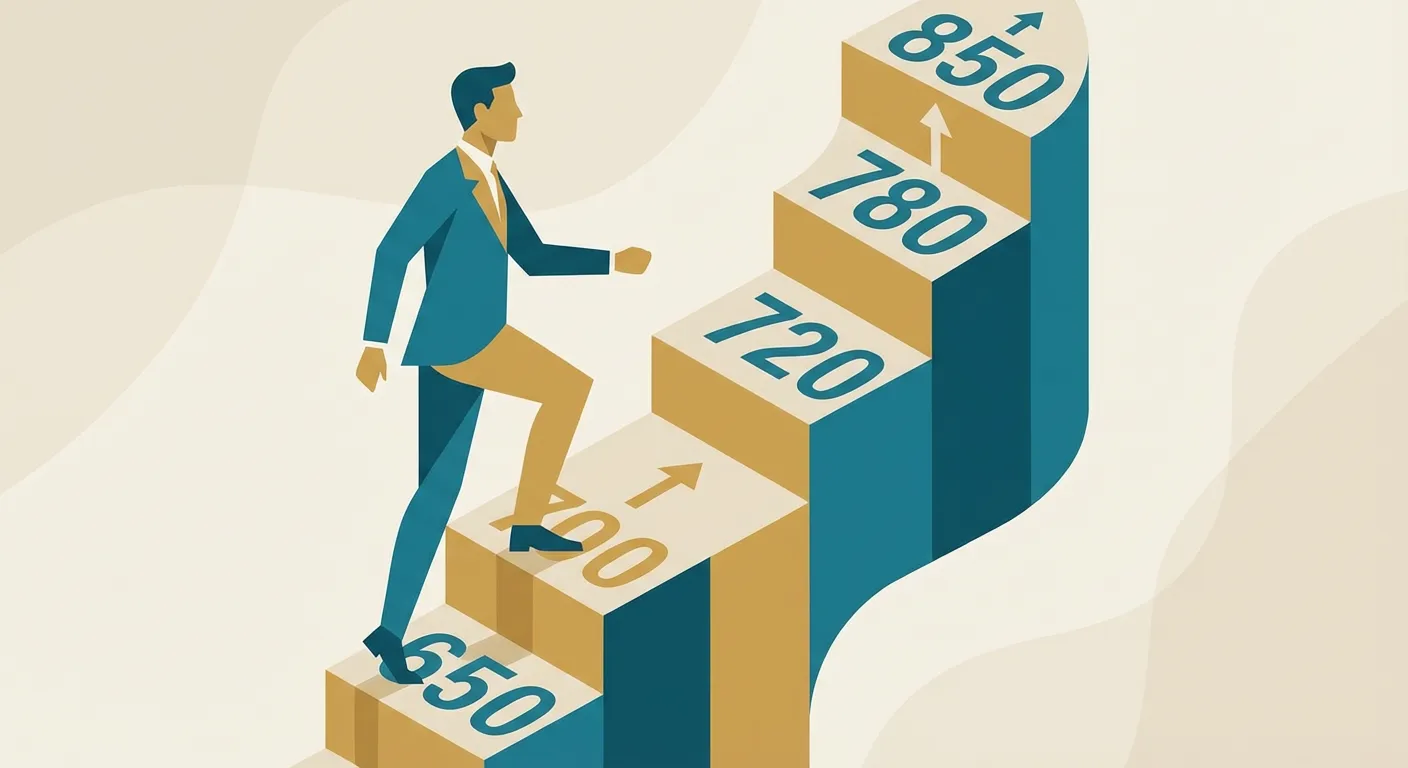
Your credit score is the single most influential number in any loan application. It determines whether you get approved, what interest rate you’re offered, and how much you can borrow. A difference of just 50 points can mean thousands of dollars saved — or lost — over the life of a loan.
The good news: your credit score is not a permanent verdict. It’s a snapshot that changes as your financial behavior changes. With the right approach, meaningful improvement is possible in as little as 30 to 90 days.
Key Insight: Borrowers with scores above 740 typically access interest rates 10 to 15 percentage points lower than those with scores below 600. On a $20,000 loan over five years, that difference can exceed $8,000 in total interest.
Step 1: Know Your Starting Point
Before you can improve your score, you need to know exactly where you stand and what’s affecting it.
Pull your credit reports from all three bureaus. You’re entitled to free reports from Equifax, Experian, and TransUnion through AnnualCreditReport.com. Review each one carefully — they can differ.
Understand the scoring model. FICO scores, the most widely used, range from 300 to 850 and are calculated from five factors:
- Payment history (35%) — Your track record of paying on time
- Credit utilization (30%) — How much of your available credit you’re using
- Length of credit history (15%) — How long your accounts have been open
- Credit mix (10%) — The variety of credit types you carry
- New credit inquiries (10%) — Recent applications for new credit
What to do: Identify which of these five areas is dragging your score down the most. That’s where your effort will have the greatest impact.
Step 2: Dispute Errors on Your Credit Report
Studies have shown that a significant percentage of credit reports contain errors — some serious enough to affect your score. Common errors include:
- Accounts that don’t belong to you
- Incorrect payment statuses (marked late when you paid on time)
- Duplicate accounts or debts listed more than once
- Outdated information that should have been removed
- Incorrect credit limits or balances
How to dispute: File disputes directly with the credit bureau reporting the error. You can do this online, by mail, or by phone. The bureau is required to investigate within 30 days. Include supporting documentation — payment confirmations, account statements, or correspondence with the creditor.
Important: Correcting a single serious error — like a payment incorrectly marked as 90 days late — can boost your score by 50 to 100 points.
Step 3: Reduce Your Credit Utilization
Credit utilization — the percentage of your available credit that you’re currently using — is the second most important factor in your score and the fastest to change.
The target: Keep utilization below 30% across all cards. Below 10% is ideal.
Example: If your total credit limit across all cards is $10,000, your total balances should stay below $3,000 — and ideally below $1,000.
Strategies to reduce utilization quickly:
- Pay down balances aggressively. Focus on the cards with the highest utilization percentages first.
- Make multiple payments per month. Pay before your statement closing date so a lower balance is reported.
- Request credit limit increases. If your income has increased or your payment history is solid, ask your card issuers for higher limits. This lowers your utilization ratio without requiring you to pay anything down.
- Keep old accounts open. Closing a card removes its credit limit from your total available credit, which can spike your utilization.
Step 4: Build a Perfect Payment History
Payment history accounts for 35% of your score — the largest single factor. Even one missed payment can cause a significant drop, and the damage increases with the severity of the delinquency.
The plan:
- Set up autopay for at least the minimum payment on every account. This prevents accidental missed payments.
- Create calendar reminders a few days before each due date as an extra safety net.
- If you’ve missed a payment recently, get current immediately. The longer a delinquency goes unreported, the worse the damage. Payments aren’t typically reported to bureaus until they’re 30 or more days late.
- If you have a one-time late payment and otherwise good history, call the creditor and ask for a goodwill adjustment. Some creditors will remove a single late payment from your record if you’ve been a reliable customer.
Step 5: Be Strategic About New Credit
Every time you apply for new credit, the lender performs a hard inquiry on your report. Each hard inquiry can lower your score by 5 to 10 points and stays on your report for two years.
What to do:
- Avoid applying for new credit cards or loans in the months before your loan application. Each inquiry signals risk to lenders.
- Use prequalification tools. Many lenders offer prequalification with a soft pull that doesn’t affect your score. This lets you check your likelihood of approval before committing to a hard inquiry.
- If you must shop around for rates, do it within a focused 14-to-45-day window. Most scoring models treat multiple inquiries for the same type of credit within this window as a single inquiry.
Step 6: Diversify Your Credit Mix
Having a variety of credit types — credit cards, an auto loan, a student loan, a retail account — shows lenders you can manage different kinds of debt responsibly. This accounts for 10% of your score.
A word of caution: Don’t take on unnecessary debt just to diversify. This strategy is about optimization, not about borrowing more. If your credit profile is thin (few accounts), consider:
- A credit-builder loan — Small loans specifically designed to help establish payment history. The funds are held in an account until you’ve made all payments.
- Becoming an authorized user — If a family member with good credit adds you to their card, their positive history on that account can boost your score.
- A secured credit card — You put down a deposit that becomes your credit limit. Use it for small purchases and pay in full each month.
Step 7: Give It Time — But Start Now
Some improvements happen quickly. Reducing credit utilization can boost your score within a single billing cycle. Disputing errors can show results in 30 days.
Other improvements take longer. Building a track record of on-time payments, aging your accounts, and recovering from serious delinquencies are gradual processes.
A realistic timeline:
- 30 days — Utilization improvements, error dispute results
- 60–90 days — Visible score movement from consistent on-time payments and lower balances
- 6–12 months — Substantial improvement from sustained good habits
- 12–24 months — Recovery from major negative events like collections or charge-offs
Pro Tip: Start working on your credit at least three to six months before you plan to apply for a loan. This gives you time to make meaningful improvements and ensures your score reflects your current behavior, not past mistakes.
What Not to Do
Avoid these common mistakes that can hurt your score or undo your progress:
- Don’t close old credit cards. Even if you’re not using them, they contribute to your credit history length and total available credit.
- Don’t max out a single card. Even if your overall utilization is low, a single card near its limit can hurt your score.
- Don’t apply for multiple credit products at once. Each application generates a hard inquiry.
- Don’t ignore small balances. Even a $25 balance that goes to collections can cause serious damage.
- Don’t pay for credit repair services that promise guaranteed results. Anything they do, you can do yourself for free.
The Payoff: Better Rates, Better Terms
The effort you put into improving your credit score directly translates to financial savings. Here’s what a higher score can mean on a $15,000 personal loan over five years:
- Score 580 (fair): ~25% APR = ~$10,200 in total interest
- Score 670 (good): ~15% APR = ~$5,600 in total interest
- Score 740 (excellent): ~8% APR = ~$3,100 in total interest
That’s a potential difference of over $7,000 — simply by improving your credit profile before applying.
This guide is for educational purposes only. VictoryLoans.com is an independent educational resource — not a lender, bank, or financial advisor. Always consult with a qualified professional regarding your specific financial situation.